Case study
The Foundation Partner National Board
An international operating model for a retail partnership, built from scratch and handed over to a co-lead successor board.
The problem
One of Microsoft's largest retail partnerships had a foundation relationship with real goodwill and no operating model behind it: one-off activations, no governance, no measurement, and no way to repeat what worked.
My mandate
A national volunteer board I created and led alongside my commercial day job. I owned the operating model, the board itself, the partner rhythm, and the quarterly business reviews; nine pillar leads owned their lanes, and I mentored each of them.
The call
Run it like a business. A four-pillar value framework, every flagship mapped to at least two commercial priorities, income kept separate from in-kind value, and a reporting cadence the partner could plan around.
What changed
Sources: FPNB FY26 Board Member Contributions; FY26 H2 review; Create with Copilot programme records.
What survived the handover
A co-lead successor model with a phased handover, an official playbook, and an operating model now used as a template for adjacent retail and foundation work.
It started local: one store relationship, one Teen Tech Center, and a hunch that the partnership could carry something bigger. What was missing was not goodwill. It was infrastructure: a way to decide what to do, measure what it produced, and repeat it.
The model I built treats community investment and commercial growth as one system. Every activation had to move a genuine youth outcome and map to at least two commercial priorities, or it did not run. Income, meaning grants and donations, stayed separate from in-kind value, meaning product and marketing, so the forecasting stayed honest. The programme ran on no direct budget of its own. Beyond select travel and other approved P&L exceptions, activations were funded organically: cross-org Microsoft partners, grant funding, and external partners’ in-kind commitments, a sourcing discipline the playbook now teaches the board. Quarterly business reviews gave the Best Buy Foundation a rhythm it could plan around, and gave our own executives visibility, support, and accountability.
The board itself was the multiplier: nine pillar leads, each owning a lane from skilling curriculum to data and impact analytics, with more than forty volunteers engaged around them. My job was to recruit them, mentor them monthly, and hand them real ownership. In FY26, the year of record, that team delivered four flagship experiences, 30 workshops, and $1.08M in programmatic value, reaching 659 young adults across 26 Teen Tech Centers. The figure follows a methodology built with the executive sponsors and accepted by the Best Buy Foundation as the standard for quarterly reporting: earned media value, in-kind product and technology contributions, grant funding, volunteer hours at Microsoft’s internal rate, and estimated brand exposure from partnership activations.
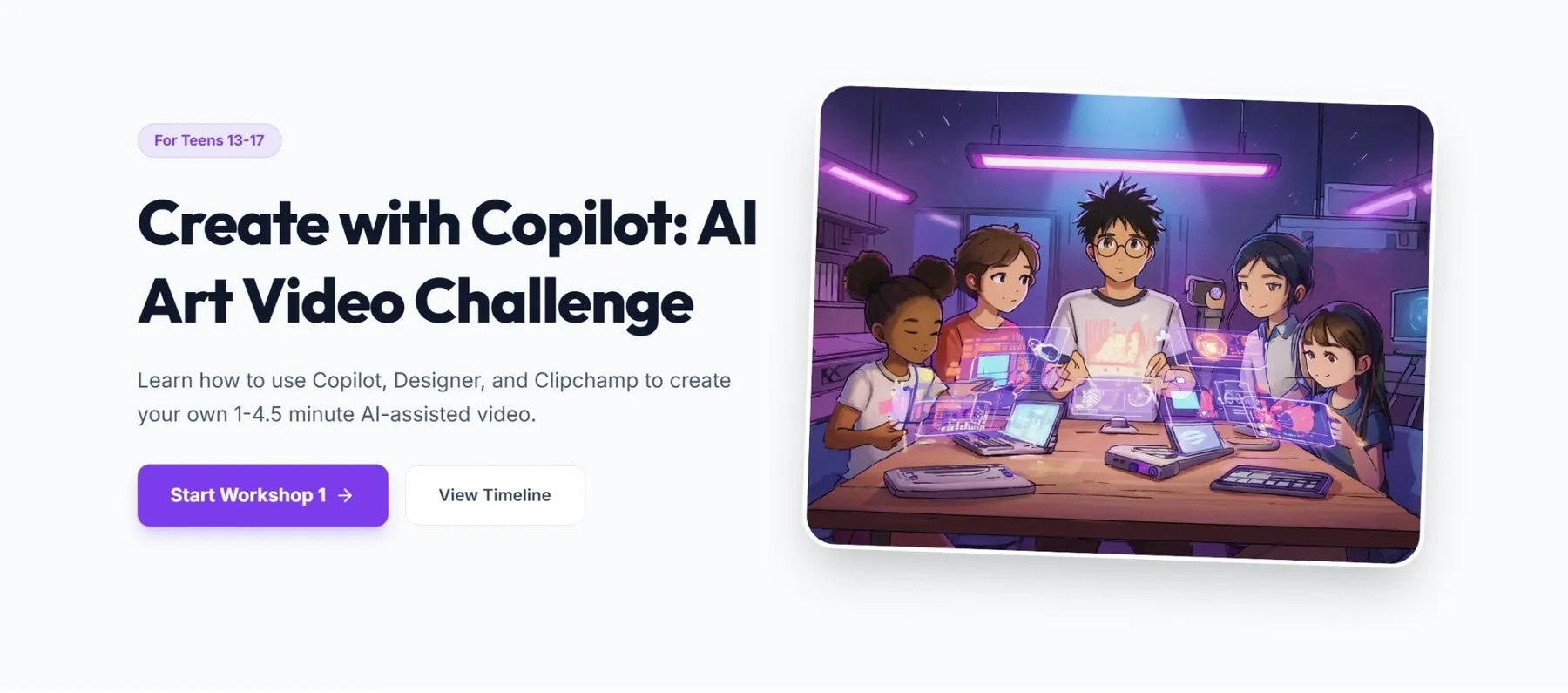
The model crossed a border. With Best Buy Canada and World Wide Technology we ran Create with Copilot, a four-workshop AI video challenge for secondary schools, delivered as parallel originals in English and Quebec French, with a prize pool of over $20,000 in grants and hardware. Building for a second country forced the operating model to become genuinely portable: localisation, different school technology environments, and a partner calendar we did not control.
The board did not leave with me when I did. The handover ran in phases over six months to a co-lead model, with an official playbook and the institutional knowledge written down. If I built it again, I would share the leadership from the first year: the board’s early life ran through me, and the co-lead structure we built for the handover is the shape it should have had all along. The clearest measure of the model is that its biggest programmes now run in other people’s hands, on schedule, with the next year’s pipeline already committed.